Teal vs Huntr (2026): Which Job Tracker Wins?
We ran the same application pipeline through both trackers — capturing postings with each browser extension, moving cards between stages, setting follow-up reminders.
The split is philosophical. Teal is a career platform with a tracker inside it. Huntr leads with the board, though it now bundles a resume builder of its own.
Side by Side
| Teal | Huntr | |
|---|---|---|
| Free plan | Tracker + resume builder; AI capped | Board + extension; 100-job cap |
| Browser extension | Yes — clips postings to board | Yes — clips postings to board |
| Resume tools | Built-in free builder + AI job matching | Free builder + basic scoring; AI is Pro |
| Interface | Feature-rich, can feel busy | Clean, board-first |
| Paid tier | Teal+ from $9/wk (≈$36/mo) | Pro $40/mo (AI documents) |
| Best for | Light AI feedback plus tracking in one place | A visual kanban pipeline |
| Not for | Heavy AI use on the free plan | Unlimited AI without the $40/mo tier |
Where Teal Wins
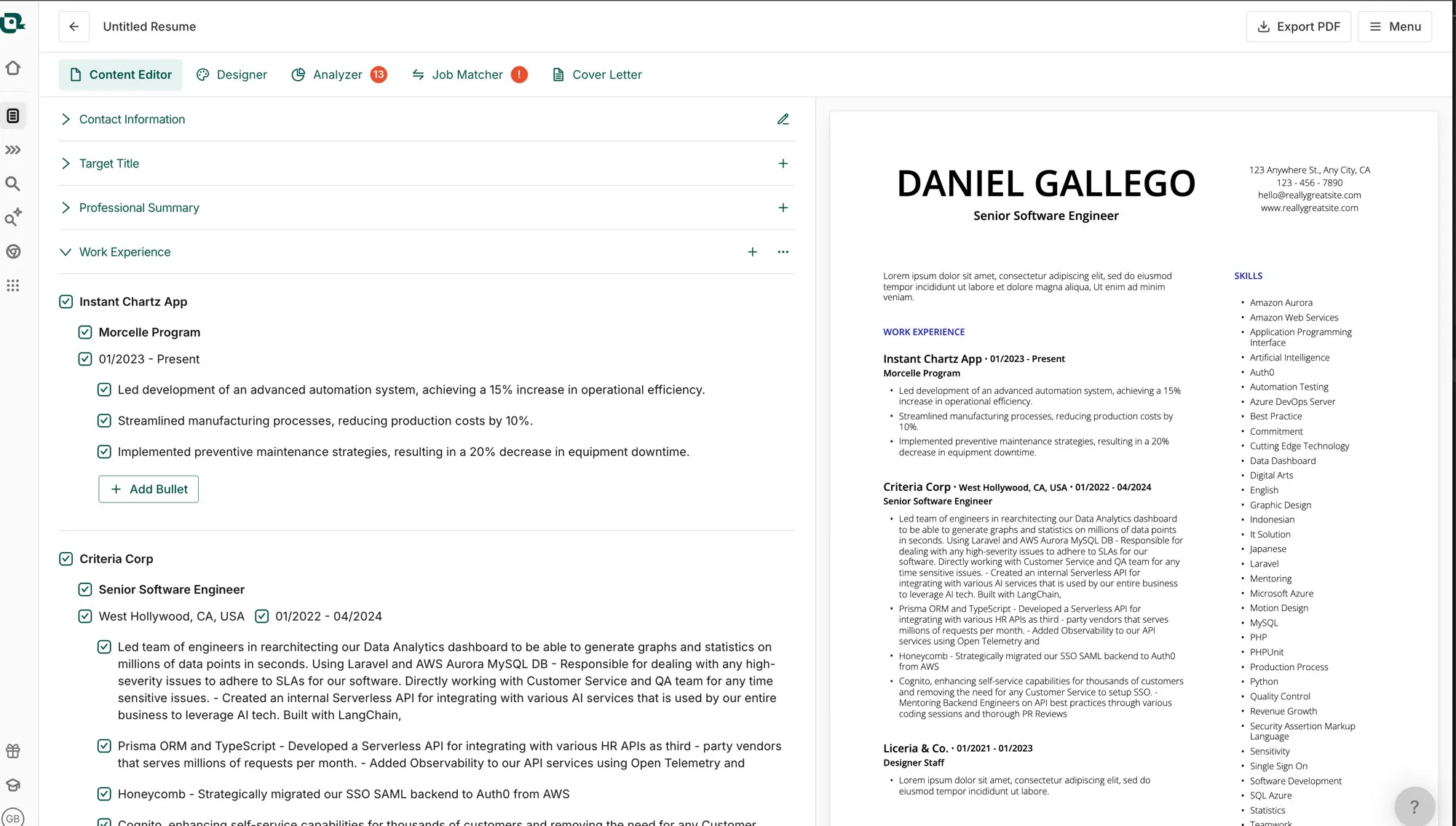
Connection. Because the resume builder lives beside the tracker, Teal scores your resume against each saved job’s description — tailoring guidance no pure tracker can offer.
If you’d otherwise juggle a separate builder and a separate keyword tool, the bundle earns its clutter.
Where Huntr Wins
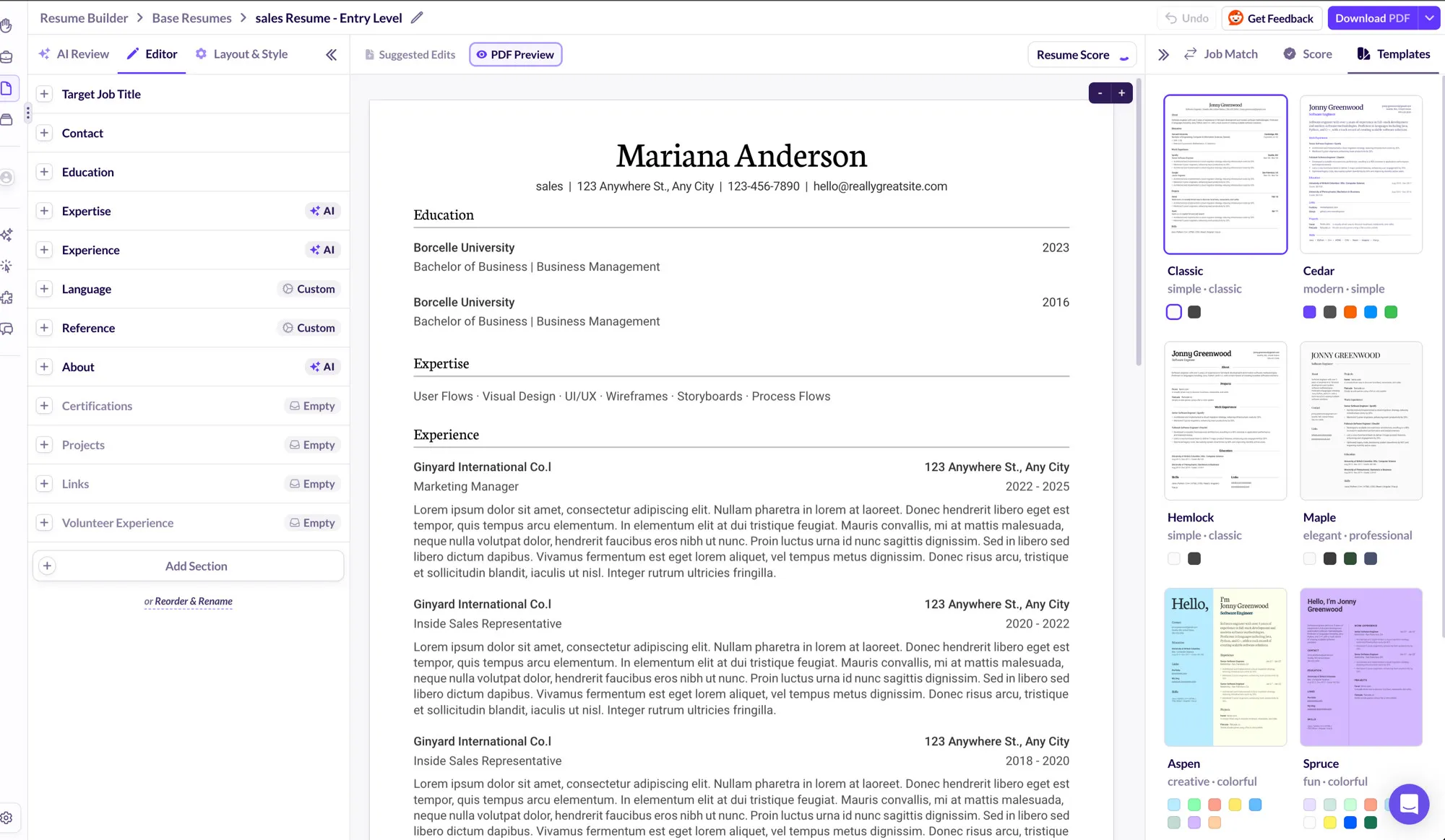
Focus. The board is cleaner, the capture-to-card flow is frictionless, and the platform around it stays quieter than Teal’s — even with Huntr’s own resume builder now in the sidebar.
People who want the pipeline front and center tend to prefer Huntr’s calm.
Pricing Reality, Long Term
Both free tiers survive a focused search. Both have a wall.
Teal’s wall is usage: AI analysis caps arrive quickly once you’re saving jobs daily. Its upgrade is billed weekly ($9/wk ≈ $36/mo if left running), so set a cancellation reminder if you subscribe for a sprint.
Huntr’s wall is volume: the free tier tracks up to 100 jobs.
Paid, they converge — Teal+ at roughly $36/month versus Huntr Pro at $40/month. Choose by which AI toolset you’d actually use, not by price.
Do You Even Need a Tracker?
Worth asking. If you’re applying to fewer than about 15 roles, a spreadsheet genuinely works — the value of a tracker is the browser extension that captures a posting in one click, and that only pays off at volume.
Where trackers earn their keep is follow-up discipline. Most candidates lose interviews to silence, not rejection, and a board that surfaces “applied 10 days ago, no reply” is what prompts the nudge. Our job application guide covers where follow-up fits in the sequence.
The Verdict
- Want resume tools and tracking together: Teal — mind the AI caps and the weekly billing if you upgrade.
- Want the cleanest dedicated pipeline: Huntr — the 100-job free cap is the main constraint.
- Bottleneck is finding roles, not tracking them: a tracker won’t help. A job board sourced from company career pages will.
Full hands-on writeups for each: the Teal review and the Huntr review. If forms rather than organization are your bottleneck, the Simplify review covers the autofill-first alternative — and our career tool reviews index has the rest.
Frequently Asked Questions
Is Teal or Huntr better for tracking job applications?
For pure tracking, Huntr — cleaner board, less surrounding platform. For tracking connected to resume tooling, like keyword scoring against each saved job, Teal. Both free tiers work for a focused search.
Are Teal and Huntr free?
Both have real free tiers with no credit card. Teal’s caps are on AI usage; Huntr’s cap is 100 tracked jobs plus 2 job-tailored resumes. Long, high-volume searches eventually hit either wall.
Do both have browser extensions?
Yes — both clip a job posting into your board in one click, which is the feature that beats spreadsheets. The extensions are comparable; the platforms around them are what differ.
Which is cheaper if I upgrade?
They land close. Teal+ is billed weekly ($9/wk ≈ $36/month if left running) and Huntr Pro is $40/month. Pick by feature set — Teal’s per-job analysis versus Huntr’s AI document generation — and set a cancellation reminder for a sprint either way.
Can I just use a spreadsheet instead?
For a small search, yes. Under roughly 15 applications a spreadsheet is fine. Past that, the one-click capture from a browser extension saves enough time to justify a real tracker.