Kickresume vs Rezi (2026): Which Cover Letter Tool Wins?
We generated cover letters for the same job posting on both platforms. They approach the problem from opposite ends.
Kickresume is design-first — beautiful, matched resume and letter packages, with AI as a paid assistant. Rezi is AI-first — the job description goes in, a keyword-targeted draft comes out, and design is secondary.
Side by Side
| Kickresume | Rezi | |
|---|---|---|
| Free plan | 4 templates; AI mostly premium | Limited AI credits that genuinely draft letters |
| AI writing | Paid (from ~$8/mo yearly) | Free within credits · Pro $29/mo |
| Design quality | Excellent, matched resume + letter sets | Functional, ATS-oriented |
| Watermark | None | None |
| Credit card for free tier | No | No |
| Best for | Template variety and modern design | AI-generated first drafts |
| Not for | Doing everything on the free plan | Unlimited AI writing on free |
Where Kickresume Wins
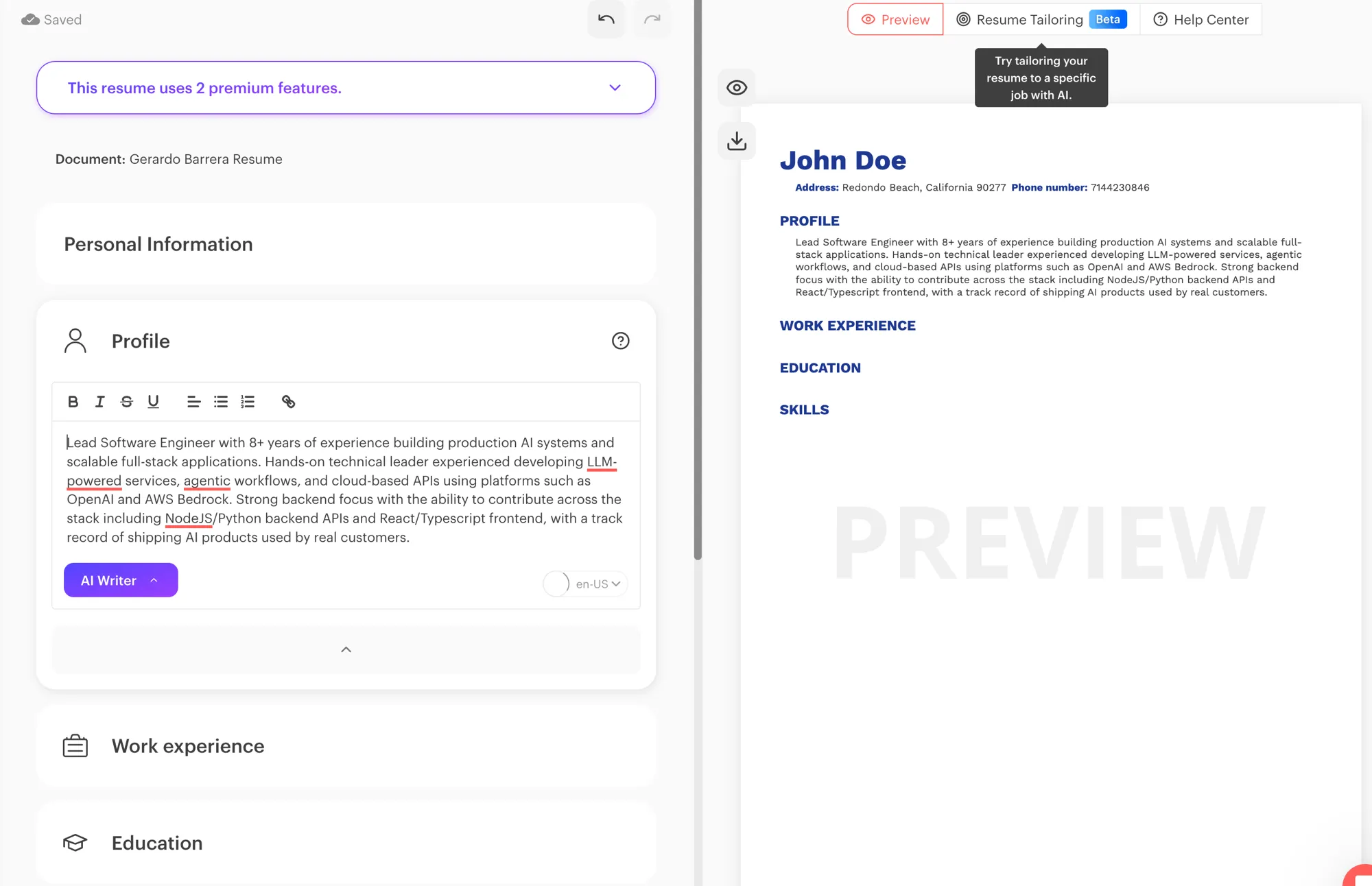
Presentation. If you want an application package that looks designed — resume and cover letter sharing a visual system — Kickresume has no real rival here.
The AI assistant is capable too. It’s just priced into premium, so the free tier functions as a preview.
Where Rezi Wins
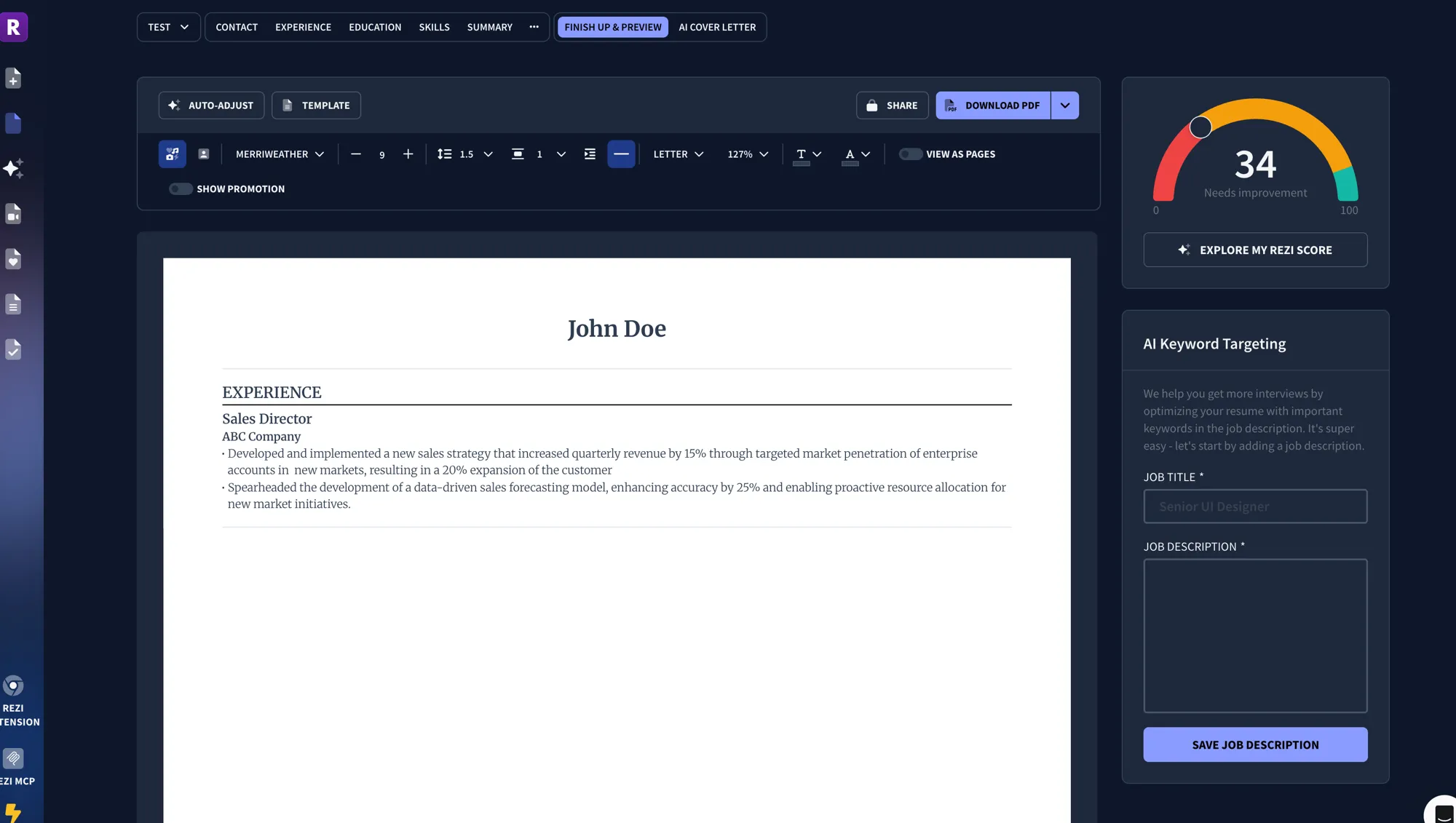
The actual writing, free. Rezi’s free credits produce keyword-targeted drafts from the job description — the core task done at no cost, where Kickresume asks for a subscription first.
Its ATS-oriented plainness is a feature for online applications, if not for aesthetics.
Pricing Reality, Long Term
For a one-off application, both free tiers get you a letter — Rezi with a real AI draft, Kickresume with a template you write yourself.
For a multi-month search the math flips around what you value. Kickresume premium ($24/mo, or about $8/mo billed yearly) buys the full design library plus AI. Rezi Pro ($29/mo, with a $149 lifetime option) buys unmetered AI drafting.
Neither requires a card to evaluate, and neither watermarks exports — so try both free tiers on a real posting before subscribing to either.
A Caution on AI-Drafted Letters
Both tools produce fluent output. Fluent is not the same as convincing.
The draft will be structurally correct and completely generic: it will praise the company’s “innovative culture” without naming a product, and restate your resume without explaining why this role. That’s the version hiring managers have learned to skim past.
Ten minutes of editing — real numbers, the company’s actual product, a specific reason you’re applying — is the difference between plausible and credible. Our guide on how to start a cover letter covers the opening lines that survive that skim, and common cover letter mistakes covers what to cut.
The Verdict
- Drafting letters free: Rezi — the free credits do real work.
- Paying for a polished, matched package: Kickresume.
- Heavy AI use long-term: compare real monthly costs — Kickresume $24 (about $8 on yearly billing) versus Rezi $29 (or $149 once) — against how much design actually matters for your applications.
Full hands-on writeups for each: the Kickresume review and the Rezi review. For a traditional alternative that writes letters the old-fashioned way, see the Novoresume review.
If you’re weighing Kickresume for resumes rather than cover letters, see FlowCV vs Kickresume, our Kickresume alternatives roundup, or the full career tool reviews index.
Frequently Asked Questions
Which is better for cover letters, Kickresume or Rezi?
For free AI-drafted letters, Rezi — its free credits genuinely generate keyword-targeted drafts. For a designed, matched resume and cover letter package, Kickresume — but budget for premium, since its AI sits behind the paywall.
Can I use both for free?
Yes, and it’s worth doing. Neither requires a credit card, and neither watermarks exports. Run the same job posting through both free tiers before subscribing to either.
Do Kickresume and Rezi write resumes too?
Both do. Kickresume is a full resume builder with a large template library; Rezi generates keyword-targeted resumes with an ATS scoring system.
Is AI-generated cover letter content safe to send?
As a draft, yes. As-is, no. Both tools produce fluent output that still needs your specifics — real numbers, the company’s actual product, why this role. Ten minutes of editing is the difference between plausible and credible.
Do I even need a cover letter in 2026?
It depends on the role and the company. Our guide on whether you need a cover letter breaks down when it moves the needle and when it’s ignored.