FlowCV vs Kickresume (2026): Which Resume Builder Wins?
We put both builders through the same task: build a complete resume from scratch on the free plan, customize it, and download a PDF without entering a credit card.
They represent two philosophies. FlowCV gives you an honest, fully usable free product limited to one resume. Kickresume shows you a beautiful product and charges for most of it.
Side by Side
| FlowCV | Kickresume | |
|---|---|---|
| Free plan | 1 resume + 1 cover letter | 4 templates; AI and most features premium |
| Free PDF export | Yes | Limited |
| Watermark | None | None |
| Credit card required | No | No |
| AI features | Paid | Paid |
| Starting price | Free · Basic $3/mo · Pro $5/mo (yearly) | Free (limited) · Premium from ~$8/mo (yearly) |
| Best for | One polished resume with zero tricks | Template variety and modern design |
| Not for | Multiple tailored versions on free | Doing everything on the free plan |
Where FlowCV Wins
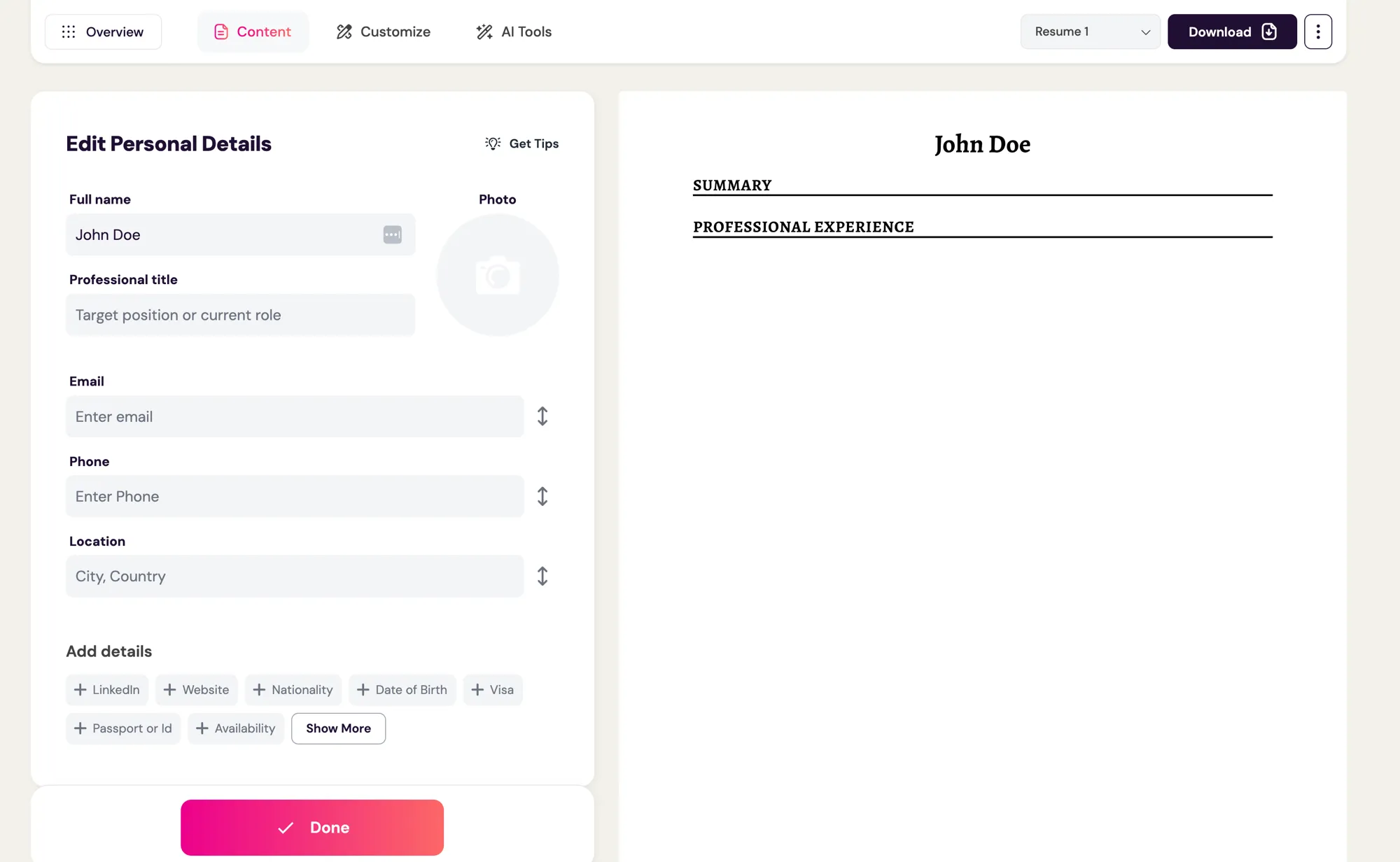
The free plan. FlowCV’s free tier is a complete product: unlimited PDF downloads, no watermark, full template access, and deep design customization.
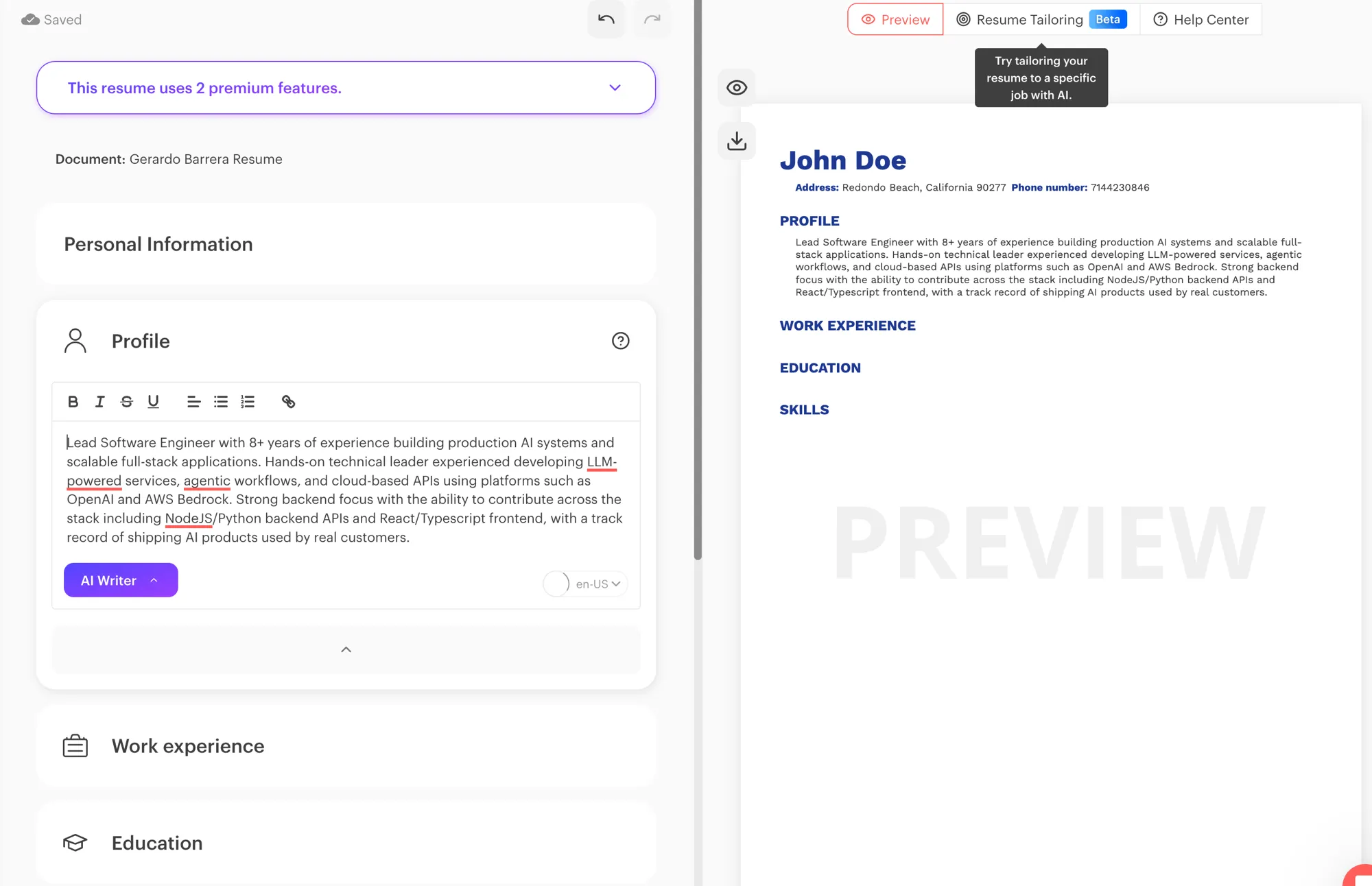
Kickresume’s free tier caps you at 4 templates and holds back the AI writing assistant — it functions like a preview. If you won’t pay, FlowCV is the clear choice.
Where Kickresume Wins
Design and breadth — if you’ll pay. Kickresume’s template library is larger and more polished, the AI writing assistant is genuinely useful, LinkedIn import saves setup time, and it generates matching cover letters.
From about $8/month billed yearly ($24 month-to-month) it’s a strong product. FlowCV’s paid tiers ($3–5/month) are cheaper but mainly add more resumes and AI.
Pricing Reality, Long Term
The paid tiers aren’t comparable products.
FlowCV’s tiers mostly buy you more resumes on top of an already-complete free product. Kickresume premium buys the product itself — the template library, the AI assistant, cover letters.
Compare what you’re actually buying, not just the sticker price. Neither free tier requires a card and neither watermarks exports, so the cheap move is to build the same resume on both before deciding.
One thing worth flagging on the free plans: FlowCV’s one-resume limit matters more than it sounds. If you’re tailoring your resume to each job — which meaningfully improves your odds — you’ll want multiple versions, and that’s exactly where FlowCV’s free tier stops.
ATS Compatibility
Both offer clean single-column options that parse well. FlowCV’s defaults lean parseable; Kickresume’s library includes more decorative designs, so pick its cleaner layouts for online applications.
If you’re unsure whether a template will survive automated screening, our guide on what an ATS is and how it works covers what these systems actually read — and what breaks them.
The Verdict
- Staying free: FlowCV, without hesitation.
- Paying for design, AI, and cover letters: Kickresume.
- Want AI writing without a subscription? Neither offers it free. Rezi’s free credits are one option, and our own free resume builder is another — though we build that one, so weigh it accordingly. The FlowCV/Kickresume comparison above stands on its own either way.
Full hands-on writeups for each: the FlowCV review and the Kickresume review go deeper on templates, exports, and where each free tier stops.
For the wider field, see our test of 10 free resume builders, our roundup of Kickresume alternatives, or every tool we’ve tested in our career tool reviews.
Frequently Asked Questions
Is FlowCV or Kickresume better for a free resume?
FlowCV — its free tier is a complete product: one resume, unlimited watermark-free PDF downloads, all templates, full design customization. Kickresume’s free tier caps you at 4 templates and holds AI back for premium.
Is Kickresume worth paying for over FlowCV?
If you want the large designed template library, AI writing, and matching cover letters — yes, that’s what premium buys (about $8/month billed yearly, $24 month-to-month). FlowCV’s cheaper paid tiers ($3–5/month billed yearly) mainly add more resumes and AI to an already-complete free product.
Do FlowCV or Kickresume watermark exports?
Neither. Free-tier exports from both were clean in our testing. The difference is feature access, not defaced output.
Which has better ATS-friendly templates?
Both offer clean single-column options that parse well. FlowCV’s defaults lean parseable; Kickresume’s library includes more decorative designs — pick its cleaner layouts for online applications.
Can I use both for free?
Yes, and it’s worth doing. Neither requires a credit card, so building the same resume in both takes about 30 minutes and tells you more than any comparison table.